Tuesday, December 9, 2008
New York Study Tour End
I really enjoyed the New York Study Tour, it was amazing! Previously not knowing that much about art, the tour has opened my eyes to the art world, of which I am grateful for, because now I have an appreciation for art and the knowledge and effort that goes into creating such amazing pieces. The tour also gave me the chance to see and experience New York City of which I have always wanted to do and finally had the chance. Our lecturer, Mark Pennings had a wealth of knowledge to share about the art and the city, which came in handy. I met so many amazing new people, of which I am sure I will keep in contact for time to come. This puts an end to the Study Tour and my trip to the city that never sleeps, an experience I’ll never forget.

Friday 5/12/08
We had a free morning, which we used to catch up on sleep, use the Internet to email family and friends back home and have a late breakfast/lunch. Just after lunch we met at the Hostel, to all catch the subway to Harlem together, as none of us had been there before. When we got there, we went to The Studio Museum in Harlem, one of the few museums purely dedicated to Afro-American artistic practice. The exhibitions currently on were the Birth of the Cool by Barkley L. Hendricks; VideoStudio, an ongoing series of video and time-based art; Collection in Context: Four Decades; and Project Space by Shinique Smith. Hendricks' work was a collection of portraits and landscapes; with the life size portraits blending realism and postmodern elements. My favourite pieces in this exhibition were two paintings called Vertical Hold and Dippy’s Delight, which were basketball related paintings about one of Hendricks favourite pastimes, playing basketball. I also play and coach basketball so had a connection to these pieces, which to describe in the basic geometric form were a circle, square and rectangle. It was through the cultural lens of basketball, that Hendricks looks at colour and geometry through abstraction and minimalism. I also really liked the VideoStudio, which showed short films about 3-4 minutes in length by various artists. In Shinique Smith’s Project Space, I really enjoyed the piece Like it Like That, which was a depiction of an urban street scene created with paper images overlapping graffiti painted on the wall. It was similar to a lot of street art we had seen, but obviously more in depth, with layers of expression which were mesmerising to look at. The museum was only small so it didn’t take too long to get to see everything. This was a positive in that we didn’t miss anything, unlike some of the other museums visited.
After the visit to Harlem we went back to the Hostel to get ready to go out for our end of tour dinner at Arturo’s Restaurant Pizzeria. It was a really nice Italian restaurant and the meals were so big and tasted amazing. We had heaps of fun discussing the tour, what we liked and disliked and the good and bad experiences we had all had. It was really good to just sit back and enjoy a great meal chatting about our experience and a chance to get some last minute group photos.

After the visit to Harlem we went back to the Hostel to get ready to go out for our end of tour dinner at Arturo’s Restaurant Pizzeria. It was a really nice Italian restaurant and the meals were so big and tasted amazing. We had heaps of fun discussing the tour, what we liked and disliked and the good and bad experiences we had all had. It was really good to just sit back and enjoy a great meal chatting about our experience and a chance to get some last minute group photos.


Thursday 4/12/08
We caught the subway all the way to Brooklyn to go to the Brooklyn Museum. There were lots of different exhibitions on different floors while we were there. I really liked The Black List Project by Timothy Greenfield-Sanders and Elvis Mitchell. Comprised of photographs, documentary film and a companion book, it displayed famous and successful African Americans like Chris Rock, Kareem Abdul-Jabbar and Serena Williams. Gilbert and George had an exhibition which was very interesting and different from anything I have seen yet on the tour. My favourite in their collection was probably Balls or The Evening Before The Morning After. Another exhibition was Burning Down the House, building a feminist art collection which had over 50 years of collections of works by artists that have risen above narrow roles imposed on women or challenged the status quo, fighting for equality and justice for all. Out of this exhibition, my favourite piece was by Edwina Sandys called Marriage Bed, which was a full size bed half covered in roses and the other half covered in nails depicting both the good and bad of married life. The Brooklyn Museum also had a contemporary art collection. My favourite collection was the Kehinde Wiley paintings, in particular Go, which was on the ceiling. We had to rush a little bit through the contemporary art section as we were running out of time, so I didn’t get a real good look at all the pieces of work, but all in all an enjoyable experience at the Brooklyn Museum.
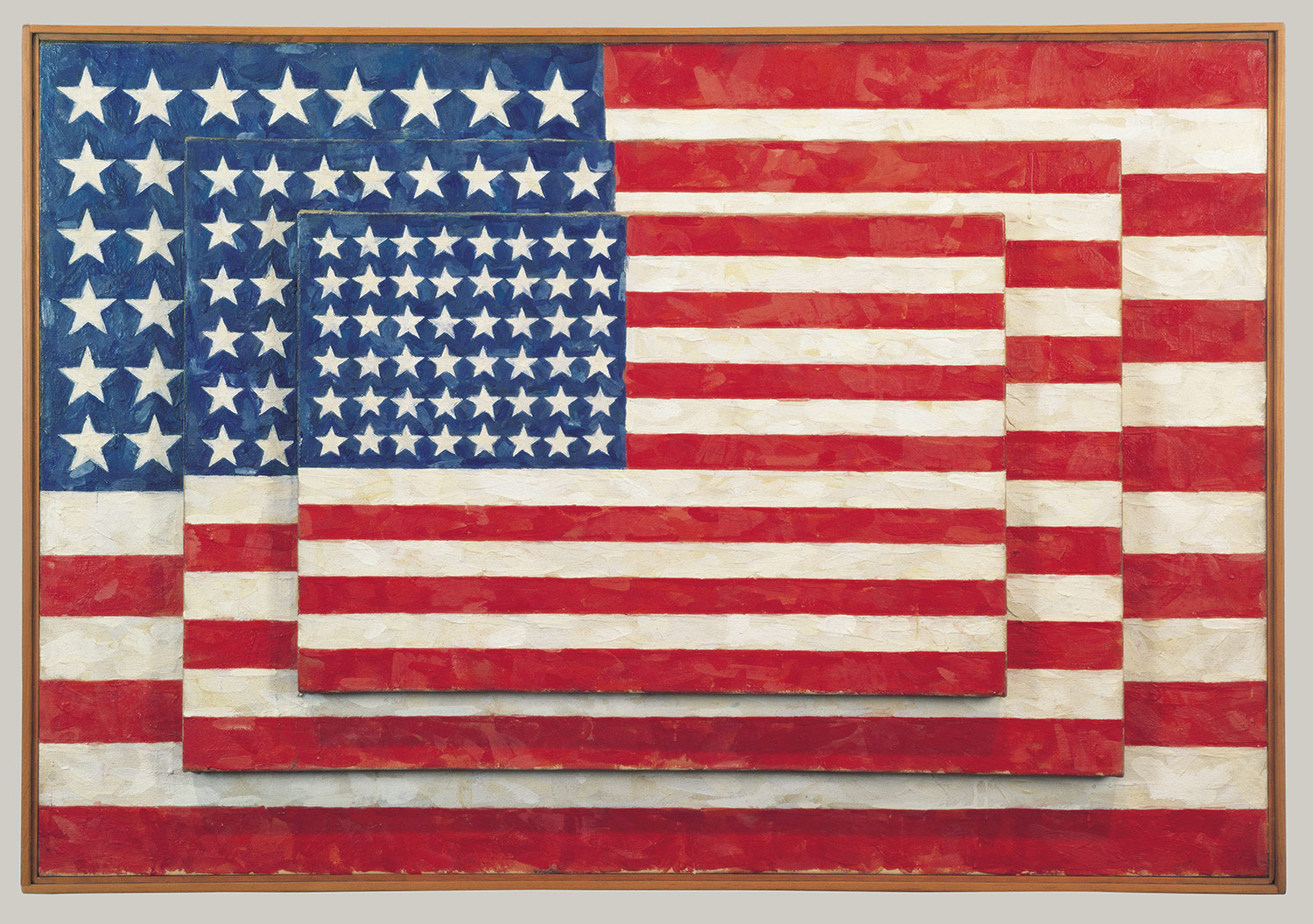
After a quick lunch we jumped on the subway and headed uptown to go to the Whitney Museum of American Art. The Whitney consisted of five floors each with different exhibitions which were all very interesting. On the first floor Corin Hewitt’s Seed Stage exhibition was on display, which was only small but quite fascinating. Hewitt had photographs and an installation using organic and inorganic materials. I guess no one ever told him not to play with his food! On the second floor there were two exhibitions, the first called Progress which bought together works from the Whitney’s permanent collection. My favourite pieces in this were the works by Naum Gabo called Linear Construction in Space and Number 4; and also Nicholas Nixon’s Brown Sisters which consisted on four photographs of the same sisters aging over time. The third floor had William Eggleston’s collection Democratic Camera, Photographs and Video, 1961-2008. On this floor we had a group discussion about the works, talking about how the photographs use American vernacular to appeal to the American culture, creating monumental everyday snapshots that are aesthetically pleasing. Level four was probably my favourite, with Alexander Calder’s The Paris Years, which displayed his wire drawings and sculptures/mobiles. They were amazing works of art where you could clearly see the precision in each piece, displaying different shapes and balance between objects all working together to create movement. My favourite piece was Calder’s Circus, which had numerous parts to it, each depicting scenes seen at the circus. The fifth floor was The Whitney Collection and Signs of the Time, which were also really interesting. My favourite pieces on this level were Jasper Johns’ Three Flags, Burgoyne Diller’s Third Theme, and Sol LeWitt’s Scribbles. I really enjoyed going to the Whitney and after an extremely long day headed home on the subway for an early night.

After a quick lunch we jumped on the subway and headed uptown to go to the Whitney Museum of American Art. The Whitney consisted of five floors each with different exhibitions which were all very interesting. On the first floor Corin Hewitt’s Seed Stage exhibition was on display, which was only small but quite fascinating. Hewitt had photographs and an installation using organic and inorganic materials. I guess no one ever told him not to play with his food! On the second floor there were two exhibitions, the first called Progress which bought together works from the Whitney’s permanent collection. My favourite pieces in this were the works by Naum Gabo called Linear Construction in Space and Number 4; and also Nicholas Nixon’s Brown Sisters which consisted on four photographs of the same sisters aging over time. The third floor had William Eggleston’s collection Democratic Camera, Photographs and Video, 1961-2008. On this floor we had a group discussion about the works, talking about how the photographs use American vernacular to appeal to the American culture, creating monumental everyday snapshots that are aesthetically pleasing. Level four was probably my favourite, with Alexander Calder’s The Paris Years, which displayed his wire drawings and sculptures/mobiles. They were amazing works of art where you could clearly see the precision in each piece, displaying different shapes and balance between objects all working together to create movement. My favourite piece was Calder’s Circus, which had numerous parts to it, each depicting scenes seen at the circus. The fifth floor was The Whitney Collection and Signs of the Time, which were also really interesting. My favourite pieces on this level were Jasper Johns’ Three Flags, Burgoyne Diller’s Third Theme, and Sol LeWitt’s Scribbles. I really enjoyed going to the Whitney and after an extremely long day headed home on the subway for an early night.


Wednesday 3/12/08
We met as a class to explore galleries in the Lower East Side. Some of the galleries seen were Feature Incorporated, DCKT Contemporary, Lehmann Maupin, Miguel Abreu Gallery, Canada and Participant Inc. I liked Joe Bradley’s Schmagoo Paintings which were at the Canada Gallery. They were drawings on white canvas, where Bradley used his own version of children’s art, like stick figures and simplistic doodling. I found them simple to look at and take in, but complicated to try to work out the meanings of the pieces, of which I could guess/gather were about power or religion. The DCKT Contemporary gallery had an exhibition by Timothy Tompkins, which had paintings where the visual had been distorted in photo-shop then painted in layers of which were distinguishable. I found these pieces unusual and different and can’t really make up my mind on whether I liked them or not. Another gallery I liked was Lehmann Maupin with artist Mr.’s exhibition Nobody Dies, which included photos and a video installation about male fetishes like cuteness and power mixed with violence. Mr. uses teenage Japanese girls in his photographs and video, as the subjects who participate in war-like survival games. It was really bizarre but interesting seeing the way he portrays the girls with a sense of power but still vulnerable by their age.
After lunch we went to the New Museum of Contemporary Art which had two exhibitions Live Forever by Elizabeth Peyton and To Be Someone by Mary Heilmann. I really enjoyed the Elizabeth Peyton exhibition, the paintings, drawings, watercolours and prints were amazing. All her art pieces were portraits of historical figures, artistic contemporaries, self portraits and of friends. My favourite was probably a picture using coloured pencil on paper called Green Nick. The Mary Heilmann exhibition were paintings based on American culture; Heilmann used paint like it was clay and her paintings were rough and raw revealing the process of the paintings. My favourites in this exhibition were The Third Man and Neo Noir which hung next to each other and were very similar. In both you could see there were layers of different colours with black being the top in both, making you think of the paintings as real paintings and not of the subjects paintings often portray. After a long day in the Lower East Side we went back to the Hostel for free pizza for dinner and to watch the Rockefeller Center Christmas Tree Lighting on tv.
After lunch we went to the New Museum of Contemporary Art which had two exhibitions Live Forever by Elizabeth Peyton and To Be Someone by Mary Heilmann. I really enjoyed the Elizabeth Peyton exhibition, the paintings, drawings, watercolours and prints were amazing. All her art pieces were portraits of historical figures, artistic contemporaries, self portraits and of friends. My favourite was probably a picture using coloured pencil on paper called Green Nick. The Mary Heilmann exhibition were paintings based on American culture; Heilmann used paint like it was clay and her paintings were rough and raw revealing the process of the paintings. My favourites in this exhibition were The Third Man and Neo Noir which hung next to each other and were very similar. In both you could see there were layers of different colours with black being the top in both, making you think of the paintings as real paintings and not of the subjects paintings often portray. After a long day in the Lower East Side we went back to the Hostel for free pizza for dinner and to watch the Rockefeller Center Christmas Tree Lighting on tv.

Tuesday 2/12/08
We headed to the Murray Guy gallery for an artist talk with Matthew Buckingham. We started by watching a video art piece by Buckingham called Amos Fortune Road which he made in 1996. It was a really interesting piece, telling a story of discovery without audio, written text appeared on the screen with the visuals. The film questioned ideas about our problematic relations with the past and history, when things transition from the past into history. It was strange because the subject matter of the film is not one of which I would normally relate to, however the piece seemed to pull the viewer in, wanting to continue to discover more. In a sense, identifying with the character of which I didn’t have an obvious connection. With no voice to connect with, the audience creates their own for the film. I found the driving scenes in the film reminded me of when I drive familiar roads; my mind goes into a sense of imagination and thinking, like there is a space of reflection between places. Buckingham spoke really well, and I really enjoyed his talk.
After a quick lunch we caught the subway uptown to go to the Metropolitan Museum. It was enormous! So big in fact, that unfortunately I didn’t have time to see everything. I did get to see the Greek and Roman art, Arts of Africa, Oceania and the Americas, Modern Art, the Drawing, Prints and Photography section and the European Paintings, all of which were amazing. The Greek and Roman, and Arts of Africa, Oceania and the Americas were fascinating, with artefacts, sculptures and jewels there was so much to take in. My favourite was the Modern Art section; one piece called Dancer – Airplane Propeller – Sea by Gino Severini was oil on canvas and he used the most amazing colours. Another amazing use of colour with oil on canvas I found mesmerising was Spectrum V by Ellsworth Kelly. Other pieces I liked included Zhang Huan’s Going to Work, which was made from ash on linen and Elizabeth Murray’s Terrifying Terrain, which was oil on shaped canvases. The Met was a fantastic experience and if I have time I will definitely be going back there to check out the exhibitions I missed.


After a quick lunch we caught the subway uptown to go to the Metropolitan Museum. It was enormous! So big in fact, that unfortunately I didn’t have time to see everything. I did get to see the Greek and Roman art, Arts of Africa, Oceania and the Americas, Modern Art, the Drawing, Prints and Photography section and the European Paintings, all of which were amazing. The Greek and Roman, and Arts of Africa, Oceania and the Americas were fascinating, with artefacts, sculptures and jewels there was so much to take in. My favourite was the Modern Art section; one piece called Dancer – Airplane Propeller – Sea by Gino Severini was oil on canvas and he used the most amazing colours. Another amazing use of colour with oil on canvas I found mesmerising was Spectrum V by Ellsworth Kelly. Other pieces I liked included Zhang Huan’s Going to Work, which was made from ash on linen and Elizabeth Murray’s Terrifying Terrain, which was oil on shaped canvases. The Met was a fantastic experience and if I have time I will definitely be going back there to check out the exhibitions I missed.


Monday 1/12/08
We were up early to meet at 9am at Grand Central station. This was my first real look at Grand Central and it was huge, a sight in itself. We all jumped on a train heading to Beacon to visit DIA: Beacon museum. The train ride took around about an hour and a quarter, but I hardly noticed, sleeping most of the trip. Once there, we went into the museum, and the space was amazing. DIA: Beacon holds a collection of contemporary art, housed in an old biscuit factory; a lot of the works were large scale pieces. A few favourites were the LeWitt, Heizer and Serra. Sol LeWitt’s Drawing Series was one of the best collections I have seen yet. It is a series of large scale wall drawings of lines, grids, patterns and diagrams using simple colours of red, blue, yellow and black, the drawings take your breath away. You can actually see and understand the amount of time, calculation and precision that has gone into these pieces, they were unbelievable. Michael Heizer’s North East South West was a large scale installation of four shaped holes in the floor, of which the bottom was unable to be seen. The installation was barricaded off so you couldn’t get too close, however you could gather the depth of the holes which were amazing to look at and take in.
My other favourite was Richard Serra’s monumental installation of five large iron pieces nearly as tall as the roof, bent in circular shapes. Two had a gap so people could enter into the centre of the pieces and the other three also allowed you to enter but you had to follow it round, like a kind of maze to the centre. Each presented a different bodily experience and physical impact. They were so big it made you feel small and insignificant. When entering, they created a sense of journey and exploration as you couldn’t see what was ahead and to find out, you had to keep walking into the unknown creating a sense of anticipation. They created a sense of never ending, bringing the sense of risk to the table when entering, as you were not sure when you would reach the middle. The work is monumental in both the artist’s capacity and in an engineering sense with the creation of such work. After we jumped back on the train for the long trip home, I was pretty tired so slept for a short while again.
My other favourite was Richard Serra’s monumental installation of five large iron pieces nearly as tall as the roof, bent in circular shapes. Two had a gap so people could enter into the centre of the pieces and the other three also allowed you to enter but you had to follow it round, like a kind of maze to the centre. Each presented a different bodily experience and physical impact. They were so big it made you feel small and insignificant. When entering, they created a sense of journey and exploration as you couldn’t see what was ahead and to find out, you had to keep walking into the unknown creating a sense of anticipation. They created a sense of never ending, bringing the sense of risk to the table when entering, as you were not sure when you would reach the middle. The work is monumental in both the artist’s capacity and in an engineering sense with the creation of such work. After we jumped back on the train for the long trip home, I was pretty tired so slept for a short while again.
Sunday 30/11/08
We had another slow morning, sleeping in and taking our time getting ready. We didn’t end up leaving the Hostel til just after lunch. We went to Times Square to check out pricing of tickets for Broadway shows but when we got there, there was a really short line for half price tickets. We spontaneously ended up getting tickets for Mama Mia, for the 3pm show. So all excited, I went to my first Broadway show. It was amazing!!! I really enjoyed it and we were singing songs from the show on the subway ride home in the evening. It was a nice and relaxing day to end the weekend.
Saturday 29/11/08
I had a sleep-in, as a few of us are starting to get a cold. After breakfast/lunch we caught the subway downtown to lower Manhattan to do a bit of sight-seeing. First stop was the World Trade Center site, also known as Ground Zero. The area was huge and being surrounded by fencing, you were unable to see into the actual site. We went to the Tribute WTC Visitor Center to have a look at the gallery. It was such an amazing experience. A sad one and a realisation of just how big the impact of the attack was for families and friends of victims, as well as the local community and the country as a whole. Inside the gallery, it described the event step by step with video footage, audio recorded from the day and photographs. On display were items found in the wreckage, including a fire fighters uniform, a window frame from one of the planes, ID cards of workers at the Trade Centers and more. It was a really emotional experience but one that I’ll never forget and am glad I got the chance to see and do. I feel for the families and friends of victims and the people of New York City and hope that one day we can find peace on this earth so disasters like 9/11 never happen again.
After the experience of the gallery we went to get a drink and had a sit for a minute to take in everything we had seen and felt. We then walked down to Battery Park and could see the Statue of Liberty. We decided to take the Staten Island Ferry, which goes past the Statue of Liberty, so we could get photos and a closer look. When we got to Staten Island we went to a small coffee shop, I had the best hot chocolate there and a delicious choc chip muffin. It was so good. We then jumped back on the ferry and caught it back to Manhattan, and onto the subway to go home.
After the experience of the gallery we went to get a drink and had a sit for a minute to take in everything we had seen and felt. We then walked down to Battery Park and could see the Statue of Liberty. We decided to take the Staten Island Ferry, which goes past the Statue of Liberty, so we could get photos and a closer look. When we got to Staten Island we went to a small coffee shop, I had the best hot chocolate there and a delicious choc chip muffin. It was so good. We then jumped back on the ferry and caught it back to Manhattan, and onto the subway to go home.

Friday 28/11/08
Today started by catching the subway to Queens, which I hadn't done before. It wasn’t too hard. On arrival, as a class we went to The Sculpture Center, where the exhibition We Burn, We Shiver by Martin Boyce and Ugo Rondinone was on display. The exhibition was about displacement, changing the usual time and place of items to create confusion, but also provoke thought. My favourite piece was by Rosa Barba, which was a DVD documentation of a film called Its Gonna Happen. Instead of actually viewing the film's scenes, the visuals on the screen were the script directions detailing the scene. However the audio of the scene could be heard allowing the viewer to kind of become a ‘director’ in a sense, having to create the images to the film scene within their head, by reading the directions on the screen and listening to the audio/dialogue. This piece of art related to me specifically because I have studied film and television subjects and have been through a similar thought process while writing and creating short films. It was like the thought process and work behind the film was being shown as the final product. After The Sculpture Center, we had lunch and then went to look at some street art on the buildings of Queens. It was amazing, wall to wall images like nothing I had ever seen before.
We then headed to PS1 Contemporary Art Center, an affiliate to MoMa. It was in an old school, which I really liked, with three different levels and all the old classrooms filled with different works of art. The main exhibition was NeoHooDoo: Art for a Forgotten Faith, which presented works on spirituality and religion in contemporary art. However my favourite pieces were the Conspiracy Countdown by Robert Boyd, his first piece for his project Tomorrow People. It was a video installation about international conspiracy theories in particular the 9/11 terrorists attacks, UFO sightings and the AID’s virus. I found it really interesting to watch and this was definitely a favourite. Another favourite was the video installation called Mientras ellos, siguen libres by Regina Jose Galindo consisting of three titled segments; Confessions, 150, 000 Volts and Social Cleansing. The segments were about women’s and social rights, portraying very confronting images of a women, played by the artist, being abused and humiliated. I think it would be very interesting to research this artist further and to learn about her specific reasons for creating such a confronting piece. My other favourite piece was by Olafur Eliasson, Visible Mechanics, which was a huge circular mirror on the roof that rotated at different angles. The work was described to explore what it means to see, with the audience, without instruction, choosing to lie on the floor to look up into and experience the effects of the mirror. It felt like you were on the roof, and was a fun experience becoming a part of the art. I really enjoyed PS1 as I felt the exhibitions on display were very participatory for the audience, and therefore I felt it easier to understand the meanings behind the art. After a big day in Queens, we caught the subway home and chilled out in the common room discussing the day’s activities.


We then headed to PS1 Contemporary Art Center, an affiliate to MoMa. It was in an old school, which I really liked, with three different levels and all the old classrooms filled with different works of art. The main exhibition was NeoHooDoo: Art for a Forgotten Faith, which presented works on spirituality and religion in contemporary art. However my favourite pieces were the Conspiracy Countdown by Robert Boyd, his first piece for his project Tomorrow People. It was a video installation about international conspiracy theories in particular the 9/11 terrorists attacks, UFO sightings and the AID’s virus. I found it really interesting to watch and this was definitely a favourite. Another favourite was the video installation called Mientras ellos, siguen libres by Regina Jose Galindo consisting of three titled segments; Confessions, 150, 000 Volts and Social Cleansing. The segments were about women’s and social rights, portraying very confronting images of a women, played by the artist, being abused and humiliated. I think it would be very interesting to research this artist further and to learn about her specific reasons for creating such a confronting piece. My other favourite piece was by Olafur Eliasson, Visible Mechanics, which was a huge circular mirror on the roof that rotated at different angles. The work was described to explore what it means to see, with the audience, without instruction, choosing to lie on the floor to look up into and experience the effects of the mirror. It felt like you were on the roof, and was a fun experience becoming a part of the art. I really enjoyed PS1 as I felt the exhibitions on display were very participatory for the audience, and therefore I felt it easier to understand the meanings behind the art. After a big day in Queens, we caught the subway home and chilled out in the common room discussing the day’s activities.


Thursday 27/11/08
Today was Thanksgiving Day, which is huge in America. A group of us started the day early, catching the subway to Central Park to fight the crowds for a spot to watch the Thanksgiving Day Parade. The parade was really good as I have never seen anything like it before and the place was packed with families. The only downside was that the morning started off really cold and windy but otherwise ok. After the parade, we went to have lunch at TGI Friday’s, which was really nice with very big meals that completely filled me up. We then walked to Times Square and went to the cinema’s to see Four Christmas’s. It was a comedy with Vince Vaughn and Reese Witherspoon. After the movies, we had fun taking some photos in a photo booth before heading out to the street to do some window shopping up and down Times Square. By this time it was dark, so we took some more photos with the lights in the background, which were so bright and amazing. We then trekked home for an early night.


Wednesday 26/11/08
We started with a late breakfast and a walk around Chelsea before embarking on numerous visits to commercial galleries in the Chelsea District. At 11am, the class met at the Gary Snyder Project Space, where the exhibition New American Abstraction 1960 – 1975 was on display. Gary Snyder talked to us about the space and the collection, which consisted of colour-field, optical art and systematic paintings. It was really interesting to see these pieces and hear that they were from the 60's and 70's era, as I personally thought they looked quite modern. After this, a small group of us went around to other commercial galleries that we found such as Luhring Augustine, Mary Boone and Andrea Rosen Gallery. We also stopped in at Metro Pictures which was displaying a collection of Cindy Sherman photographs. Sherman’s photographs are self portraits displaying distorted ideas of beauty, self-image and aging; with each photo looking like different models due to the make-up and dress. The photos leave the artist unrecognisable to the audience and it’s only after close inspection, that you realise it is in fact the same person in every photo. I also really enjoyed the Hiroshi Sugimoto: 7 Days / 7 Nights exhibition held at the Gagosian Gallery. The exhibition comprised of fourteen black and white photographs of sea scapes, which were amazing to see.
We met back with the class for more commercial gallery talks, next was with Peter Haffner who discussed the gallery operations at the Charles Cowles Gallery. Peter talked about the efforts of the gallery to work with/for the artists they take on board and to promote their work as best they can. Next was a talk by Margaret Murray at the Murray-Guy Gallery, which had two video art installations on view. The main installation questioned the perceptions of space and time, in a virtual reality. The last commercial gallery talk was at David Zwirner to discuss the Stan Douglas and Tomma Abts shows, which were also brilliant and interesting, however I was extremely tired from a long day, so it was hard to take in a lot of the works at this last gallery. Home after another long day, we got to have free pizza at the Hostel, which was so good and tucked in for a good night’s rest.
We met back with the class for more commercial gallery talks, next was with Peter Haffner who discussed the gallery operations at the Charles Cowles Gallery. Peter talked about the efforts of the gallery to work with/for the artists they take on board and to promote their work as best they can. Next was a talk by Margaret Murray at the Murray-Guy Gallery, which had two video art installations on view. The main installation questioned the perceptions of space and time, in a virtual reality. The last commercial gallery talk was at David Zwirner to discuss the Stan Douglas and Tomma Abts shows, which were also brilliant and interesting, however I was extremely tired from a long day, so it was hard to take in a lot of the works at this last gallery. Home after another long day, we got to have free pizza at the Hostel, which was so good and tucked in for a good night’s rest.
Tuesday 25/11/08
I started the day with a sleep-in, which was nice. Once ready, a group of us caught the subway uptown, where we walked along Park Ave and Lafayette St. These two streets were really nice, much more up-market with a few little boutiques which we browsed through. We had lunch at a little cafe before meeting up with the rest of the class at the Guggenheim Museum. I started at the top of the museum and worked my way down through all the collections and exhibitions. Mark Pennings also gave us a tour and explained the exhibits. I found the tour very helpful, as I do not study fine arts/visual art and I don’t really have much knowledge on the topic. The tour provided insight into what the artists were trying to accomplish with their art pieces and the meanings behind the creations.
The exhibition currently on is Theanyspacewhatever, which is comprised of various art works from numerous artists, on the relation of aesthetics. The aim is for the audience to experience things differently than they normally would in an art museum. The exhibition conveys art as an experience constituted by our relations with the art pieces. The art (objects) are an excuse to think about our experiences and relations with the art through interaction, creating social situations. One particular piece was the Cinema liberte & Bar Lounge, which consisted of a bar giving free coffee to people and lounges for everyone to sit on with a movie playing through a projector. The art was the interaction between people as they waited in line for the coffee or sat on the lounges. People became part of the art and in a sense created the art through their experience. I liked this idea, as most of the people in the museum didn’t seem to realise that their interaction was in fact part of the art. The Guggenheim experience was an insightful and learning one. Once again another great day in New York City.
The exhibition currently on is Theanyspacewhatever, which is comprised of various art works from numerous artists, on the relation of aesthetics. The aim is for the audience to experience things differently than they normally would in an art museum. The exhibition conveys art as an experience constituted by our relations with the art pieces. The art (objects) are an excuse to think about our experiences and relations with the art through interaction, creating social situations. One particular piece was the Cinema liberte & Bar Lounge, which consisted of a bar giving free coffee to people and lounges for everyone to sit on with a movie playing through a projector. The art was the interaction between people as they waited in line for the coffee or sat on the lounges. People became part of the art and in a sense created the art through their experience. I liked this idea, as most of the people in the museum didn’t seem to realise that their interaction was in fact part of the art. The Guggenheim experience was an insightful and learning one. Once again another great day in New York City.

Monday 24/11/08
We started the day with a walk around the streets and went to a couple of shops. We stopped in for lunch at MacDonald’s. This was different from the Australian franchise experience with different meal options and larger sizes. At 12:30pm we all met in the courtyard of the Hostel, where we had a quick brief of the day and started walking to Parsons College, for a tour of the department of Fine Arts. It was really interesting to see the working spaces that students use, and to learn about the different assessment they have to complete. After a quick lunch we then headed to MoMa (Museum of Modern Art). This was an awesome experience but was hard to take everything in as there was so much art work to look at in the six floors of exhibitions.
The special exhibition by Joan Miro – Paintings and Anti-Paintings 1927-1937 was my favourite, in particular the Paintings based on Collages and Pastels. On the fifth floor, Gino Severini’s Armored Train in Action stood out, with the use of three main colours of blue, green and yellow. The Vincent van Gogh exhibition was also brilliant as I hadn’t really seen much of his work. I also really enjoyed the Architecture and Design and Photography collections. All in all, it was a great experience, and I will certainly have to go back there for a second visit.
At 7:30pm, we went to the film screening at The Sculpture Center and Anthology Film Archives to watch La Region Centrale. It portrayed a mountaintop in North Quebec, in different angled shots. I liked the first 15 minutes of the film but then felt like it was very repetitive and I became quite bored, however it was a great experience.

The special exhibition by Joan Miro – Paintings and Anti-Paintings 1927-1937 was my favourite, in particular the Paintings based on Collages and Pastels. On the fifth floor, Gino Severini’s Armored Train in Action stood out, with the use of three main colours of blue, green and yellow. The Vincent van Gogh exhibition was also brilliant as I hadn’t really seen much of his work. I also really enjoyed the Architecture and Design and Photography collections. All in all, it was a great experience, and I will certainly have to go back there for a second visit.
At 7:30pm, we went to the film screening at The Sculpture Center and Anthology Film Archives to watch La Region Centrale. It portrayed a mountaintop in North Quebec, in different angled shots. I liked the first 15 minutes of the film but then felt like it was very repetitive and I became quite bored, however it was a great experience.


Sunday 23/11/08
Today was a relaxing day to step back and take in everything that had happened so far. A big sleep in in the morning, lunch was had, and then a quiet afternoon writing emails to family and catching up on everything back home. It was good to have a rest day before the start of the actual Study Tour, which I anticipate to be very busy and mentally exhausting. All in all a great start to the New York experience.
Saturday 22/11/08
We went to the Chelsea flea markets in the morning, they were fantastic with lots of unique items and antiques. The prices were a little high but the items were one off pieces; collector’s items. Consisting of two levels, each providing us with different items. All the people at the markets were really friendly and up for a chat. After a quick lunch, we headed out for the afternoon to Times Square. We took the subway for the first time, it seemed to go smoothly; however we got off one stop too early at Penn Station so we had a look at Madison Square Garden and took lots of photos. We decided to walk from here, along the way we stopped in at Macy’s. This place is huge; so many levels all decorated for the Christmas festivities and the New Year’s Eve Ball was on display in the centre of the ground level. I thought the Macy’s windows were the best part of the store, all decorated with Christmas scenes catching everyone’s attention. Other shops along the way that we visited were Victoria’s Secret and Borders. We finally arrived at Time Square and were amazed at the bright lights; it was brilliant but very busy and crowded. Unfortunately it was very windy and we almost got blown away, but definitely a sight to go see again, maybe when it’s not so windy next time. We also went out for the first time in New York, to a club called Webster Hall. To describe it, it is very similar to The Family in the Fortitude Valley back home in Australia. On the bottom floor there was an RnB mix of music, the second floor was more pop and the top floor was Techno. It was a fantastic night, one to be remembered.


Friday 21/11/08
A small group of us headed out to explore Soho, Noho, Greenwich Village, China town and Little Italy. It was amazing; there were heaps of boutique shops with one off items for purchase. The first place we stopped was Magnolia’s Bakery. Magnolia’s Bakery is a well know bakery for selling the most delicious cupcakes, it is also seen in many movies and television shows such as Sex and the City. The streets of Greenwich Village were beautiful, with trees lining the road and different colours of the buildings mixed together to create an ascetically pleasing feel and look of the area. Some boutiques visited were Screaming Mimi’s, Patricia Fields and a number of Salvation Army op shops and a Thrift shop. China Town was very busy; there were lots of street shops selling gift type products for very cheap prices, like the I Heart NY shirts. I will have to go back there to buy some presents for family and friends back home, as the variety is endless. Little Italy made me want to eat and eat and eat! With people at each restaurant trying to lure you in to eat at their restaurant, it was very funny and entertaining at the same time. By the end of the day our legs were very sore from walking everywhere and we tucked in for a good night’s sleep.

Thursday 20/11/08
I arrived at the Brisbane International airport at 10am ready to check-in with Qantas for our flight at 12:15pm. After two movies, a few soundtracks, a couple of episodes of Family Guy and a quick stopover in LA, we arrived at JFK airport, New York. On arrival by taxi to the Chelsea International Hostel, we dumped our bags and headed straight out to the streets to explore the Chelsea district. We had our first meal in New York at Stone Oven Bake Pizza, having my first New York pizza slice. It was great and the pizza slices were huge, I only needed one piece of pizza to fill me up. We ended up walking all the way to Madison Square Garden for a quick look before heading home. The temperature wasn’t too cold, however the wind was freezing.
New York Study Tour Start
It’s the start of my New York City Study Tour which is part of my elective subject, International Study Tour. Over the duration of the tour, I will be keeping a diary on this blog site with what I do and see each day while in New York. I am hoping this diary allows me to reflect creatively and analytically about my cultural experience in New York and I hope you enjoy reading it.
Wednesday, May 14, 2008
Citizen Journalism - What Is It ?
Citizen journalism is open publishing of DIY media content such as stories, images or video sources produced by any users/participates who wish to be apart of public discussion. Some citizen journalism sites are:
- Indymedia: political activism and alternative globalisation
- Slashdot: technology news and legal issues
- OhMy News: South Korean and Japanese news and politics
- Wikipedia & Wikinews: general news and information
- Current.tv: video news and documentaries
- News blogs
The traditional news process is known as gatekeeping, where there is input: gathered news by journalists; output: closed editorial by news company; and response: the edited piece to be made public. This is different to the citizen journalism news process known as gatewatching; which starts with gatewatching: open to all users to gatewatch for news sources; input: submissions of gatewatched stories, open to all users; output: instant publishing of stories, open to all users; and response: discussion and commentary open to all users.
Free/Open Source software
Open source software is when users can read, redistribute, modify and improve software source code to evolve the software. Muir in his Open Source: Software & beyond... lecture talks about the four main free software principles:
"1. Freedom to run the program, for any purpose.
2. Freedom to study how the program works and adapt it to your needs.
3. Freedom to redistribute copies so you can help you neighbour.
4. Freedom to improve the program and release your improvements to the public, so that the whole community benefits."
Some free software models are Linux, OpenOffice and Firefox. Open source is a form of produsage, as everyone can contribute and there is shared ownership. The benefits of open source software is that there is faster development of the software including upgrades, direct response to requests and suggestions for the software, greater transparency and it costs nothing to purchase the software or upgrades. Problems however, is the lack of financial support for open source software and the cost for switching from commercial software like Internet Explorer, Microsoft Office or Microsoft Windows; over to open source software.
"1. Freedom to run the program, for any purpose.
2. Freedom to study how the program works and adapt it to your needs.
3. Freedom to redistribute copies so you can help you neighbour.
4. Freedom to improve the program and release your improvements to the public, so that the whole community benefits."
Some free software models are Linux, OpenOffice and Firefox. Open source is a form of produsage, as everyone can contribute and there is shared ownership. The benefits of open source software is that there is faster development of the software including upgrades, direct response to requests and suggestions for the software, greater transparency and it costs nothing to purchase the software or upgrades. Problems however, is the lack of financial support for open source software and the cost for switching from commercial software like Internet Explorer, Microsoft Office or Microsoft Windows; over to open source software.
Monday, May 12, 2008
Produsage
Produsage is a common term now being used when terms like DIY media and collaboration are mentioned. A term defined Snurb at produsage.org as “the collaborative and continuous building and extending of existing content in pursuit of further improvement.” According to Snurb there are four preconditions of produsage:
“1. Open participation, communal evaluation
2. Fluid Heterarchy
3. Unfinished Artefacts, Continuing Process
4. Common Property, Individual Rewards”
The first precondition means that the more people participate, the more input and therefore better quality of output information. Everyone has different skills, ideas and knowledge and as each person brings this to the process of produsage, a broader understanding can be developed with the continual process of contributing through evaluation. The second precondition means that everyone’s contribution is valuable as together all the contributions become equal and therefore better quality is revealed. The process allows users to work at the same time as each other in their contributions.
The third precondition means that people can continually add, change, evaluate and update the content and therefore the process remains continually unfinished. This way there are gradual developments to the communities shared content. The fourth precondition means that content created must always remain available to present and future participates for evaluations and updates. If these four preconditions are met then the creative content remains a part of produsage content for the community to share and learn from.
Brunes talks abut the advantages and disadvantages of produsage in his podcast Produsage. He identifies three advantages, “faster more frequent updates…greater involvement of the community…and outcomes are available to all.” This means that there are fewer delays which would normally be caused by editing and upgrading, can be made immediately. The community interests are represented by a more diverse range of user and shared development means shared ownership as a community. The disadvantages Brunes identifies are, “mistaken updates may be made available…community knowledge may be limited…and communities may have internal disagreements.” This means that there is potential room for errors to be included as there is no real editing completed and the community may not support the views of minority groups.
DIY Media and Collaboration
With the continual development of new technologies in today’s society, DIY media and collaboration are emerging more and more on the Internet in a number of domains such as online publishing, open source software, media sharing, creative practice, reviews, social bookmarking, geotagging, knowledge management and DIY advice just to name a few. DIY media and collaboration is making pathways for people to develop new skills in professional areas of work, with information reaching a larger audience and in a variety of different ways. It is the production of individuals in a collaborative environment, shared with millions of users around the world. There are some main principles with the production of DIY media and Collaboration, where online communities become content creators. The distribution of the content is created by a wide community of participants, with equal movement between leaders, participants and users of the content. The content continually remains unfinished and the process of content creators continues with other user continually addressing, reinterpreting and evolving the content produced by other users. There is no ownership within these sites and participation is based on merit, as the content is continually collaborated.
DIY media and collaboration removes the boundaries, with collaboration of more participates in numerous environments. Some websites within the domains or DIY media and collaboration are becoming regular website names in the everyday activities of Internet users. For example of blogs and open news sites like Slashdot, Indymedia and Ohmy News are becoming regular online publishing access sites. With media sharing and creative practice, more and more people are logging on to sites like Flickr, YouTube, Jumpcut and Current.tv, Wikipedia is a well know knowledge management website to most Internet users. Social bookmarking and geotagging sites are becoming more popular like del.icio.us, digg, Google Earth and Frapper. These DIY media and collaboration websites are becoming more popular with the everyday Internet users as forms of both professions use and recreation use.
Bruns talks about the challenges for established content industries in his DIY Media and Collaboration podcast. For example with “citizen journalism: undermines authority of mainstream news media, provides alternative views.” With this come possible opportunities between industry and communities to harness the DIY media and collaboration process and work together to continually create collaborative content.
Monday, May 5, 2008
The Difference Between Web 1.0 & Web 2.0
The development of Web 2.0 has allowed DIY communities to emerge in many different domains from open source software development, online publishing, media sharing, creative practice, knowledge management and reviewing. It has allowed online communities to become content creators, with a large number of participants with the outcome always remaining unfinished through “evolutionary, iterative and palimpsestic development” (Bruns, 2008). Many people question what the difference is between Web 1.0 and Web 2.0, basically Web 1.0 can be identified as static or still, where the information is read and becomes history. This is different to Web 2.0 which is more flexible in that information can be read by users but also continually updated so to become present information. O’Reilly explains this through some examples in his article What is Web 2.0;
| Web 1.0 | | Web 2.0 |
| --> | ||
| --> | ||
| --> | ||
| --> | ||
| --> | ||
| --> | ||
| --> | ||
| domain name speculation | --> | search engine optimization |
| page views | --> | cost per click |
| screen scraping | --> | web services |
| publishing | --> | participation |
| content management systems | --> | |
| directories (taxonomy) | --> | tagging ("folksonomy") |
| stickiness | --> | syndication |
O’Reilly writes about Web 2.0 as a new platform for the Internet in which new rules of understanding are created. Quoted in Bruns (2008) Podcast: DIY Media and Collaboration, there are three rules of understanding;
“ 1. Don’t treat software as an artifact, but as a process of engagement with your user.
2. Open your data and services for re-use by others, and re-use the data and services of others whenever possible.
3. Don’t think of applications that reside on either client or server, but build applications that reside in the space between devices.”
The creation and adaption of Web 2.0 sites allows for the user to participate and contribute to the content shared on the Internet. However, although positive in the affect of user participation, challenges do arise within the content created; such as in citizen journalism alternate views are created often undermining the influence and power of main stream news media. Or with wiki sites like Wikipedia, there is of course a broader and more varied coverage of information and topics than print encyclopedias, however the quality and reliability comes into question. Possible opportunities can arise from this between industries and communities to work together harnessing this development through cooperation of Pro-Am participation, where amateurs work to professional standards. This can combat some of the content creator challenges and allows communities to work together to continually upgrade society’s knowledge management. Go2Web20 is the complete Web 2.0 dictionary linking users with Web 2.0 sites. There is also a great video on YouTube called The Machine is us/ing Us, which describes Web 2.0 is a fun and informative way.
Tuesday, April 29, 2008
Cultural Technologies
With the continual introduction of new media technologies into society every day, culture intersects and impact’s on these technologies as they continue to develop. The concept of cultural technologies can be explained as understanding technologies as cultural forms and not just as material forms that impact on culture. Flew (2005, 21), describes cultural technologies in three levels of understanding, “understanding technologies not simply as physical objects, tools, and artifacts, but also in terms of the content they produce and distribute, and the systems of knowledge and social meaning that accompany their use and development.” The interaction of technologies between Flew’s three levels of understanding means that technologies intersect with cultures.
To simplify the three levels of understanding cultural technologies, the first level of technologies is identified as tools and artifacts as the level of aesthetics, for example the physical network of the Internet. The second level is technologies as contexts of use like browsing, bookmarking or blogging, sites such as del.icio.us or blogger. The third level is technologies as systems of knowledge, the process of creating meaning from content found.
Within this process the term technocultures is developed to describe these understandings. There are technocultural choices of the different forms of new media. Whether there is a passive audience or participating users; if it is one-to-one communication or many-to-many; if the media form is controlled by business interests or user interests; and if it is a unified culture or diverse communities. Examples of these choices are with television, which is a form of one-way communication to a one-to-many large passive audience, with only a small number of active producers. This is different to user-driven websites like YouTube, which is a form of two-way communication on a many-to-many scale for small niche audiences with a large number of contributors.
Although all new media forms are technoculturally different, they lead to “increased person freedom, reduced social hierarchy, enhanced possibilities for leisure, and a greater quality of social interaction and communication resulting from new media technologies” (Flew, 2005, 21). These new media technologies of technocultures can only develop in the networked environment. Within the networked environment is the network model whereby users must seek information in an information pull rather than knowledge push. Within this environment anyone can publish causing a large coverage of topics. However there is also some risks involved in new forms of user-driven media like a lack of authority, reliability, security or trust.
The networked environment is the present and future of new media technologies. With an abundance of information with universal media access, technocultures are only going to continue to develop. As everything is subject to reinterpretation, the quantity and quality of information available to users will continue to develop and change systems of knowledge understood by audiences.
References:
Flew, T. 2005. New Media as Cultural Technologies. in Flew, T. New Media: An Introduction. Melbourne: Oxford University Press. pp. 20-38
Monday, April 21, 2008
Online Communities
Online communities allow users on the Internet to participate to the endless source of information available to other users. Online communities help people make sense of all the information available, through the process of finding, evaluating, understanding and sharing. Communities are developed by users that have similar interests sharing information with one another, to help inform and make sense of information that by themselves could not be manageable. Rheingold in Flew’s New Media (2004), describes these online communities as “social aggregations that emerge from the Net when enough people carry on public discussions long enough, with sufficient human feeling, to form Webs of personal relationships in cyberspace” (62). Developing cooperative networks with others, users are a part of participatory culture and collective intelligence. Online communities range from forums, discussion boards, and blogs such as MySpace, Facebook, YouTube and ever Blogger.
The benefits of online communities are that users are able to create new identities both personal and in a community atmosphere not reliant on physical characteristics or geographical locations. With these new identities, users can become part of different communities of interest that might not be possible in the real world due to issues such as location. Within these communities users collaborate with each other, collecting information, sharing it and making understandings of issues relevant to their topics of interest. Users become active members of a community, creating content in today’s participatory culture. Social organisations form on an array of topics that sometimes get neglected by mainstream discussion, allowing for niche communities to develop. The development of online communities allows users to move from participatory culture to collective intelligence, networking with other communities all around the world.
However, problems do arise from the development on online communities; Dr Axel Brunes describes these problems in his podcast and slideshow Online Communities. There is a development of new barriers around online communities as they become independent and don’t always interact with other communities. Some online communities are used for worrying purposes for example supporting terrorist groups. And it also creates online and offline identities to disconnect with each other sometimes causing conflict.
When a user develops a new online identity, most of the time it does not reflect the users offline identity. This is because often online identities can be kept anonymous and therefore users can contribute without the fear of being publically humiliated. Also by becoming part of an online community which shares similar interests, it is likely other users will share the same views and beliefs. An online community can only exist if users create the content shared, however there is no requirement to contribute a certain amount of content or contribute by a certain deadline. Therefore online communities require less commitment as users can contribute whatever and whenever they feel the need. Because of the process of evaluating and sharing information, online communities are always evolving, as new information becomes available, it is understood and passed on by users.
Thursday, April 3, 2008
Technologies Becoming Cultural Technologies
Firstly technologies need to be thought of as not just physical tools and objects but as means of producing content and contexts of use.
Technologies become cultural technologies when users use technologies for a personal purpose extending the function of the technology for their own use.
It becomes cultural technologies by the way users use the technology and for what purpose, using technologies for a purpose that is relevant to their lives.
Most people use technology to interact with other users creating a cultural community allowing technology to become cultural technologies.
Terry Flew talks about this in more detail in his book New Media an introduction, particulary in chapter two New Media as Cultural Technologies.
Technologies become cultural technologies when users use technologies for a personal purpose extending the function of the technology for their own use.
It becomes cultural technologies by the way users use the technology and for what purpose, using technologies for a purpose that is relevant to their lives.
Most people use technology to interact with other users creating a cultural community allowing technology to become cultural technologies.
Terry Flew talks about this in more detail in his book New Media an introduction, particulary in chapter two New Media as Cultural Technologies.
Subscribe to:
Posts (Atom)